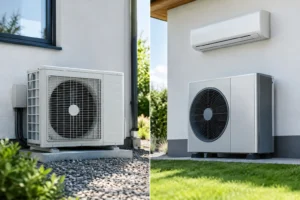
A warm bedroom that will not cool down, a sun-facing office full of computers, or a busy shop with doors opening all day can all put aircon electricity usage under the spotlight. The good news is that a correctly selected and professionally installed system can provide highly controlled comfort without the excessive running costs many people expect..
The key is to look beyond the unit’s headline power rating. How long it runs, the temperature outside, the condition of the room and the system’s efficiency all affect what appears on your electricity bill.
How aircon electricity usage is measured
Air conditioning electricity use is measured in kilowatt-hours, shown as kWh on an electricity bill. A kilowatt is the rate at which equipment uses power; a kilowatt-hour is the amount of energy used over time.
For example, a system drawing 1 kW continuously for one hour uses 1 kWh. If electricity costs 28p per kWh, that hour costs 28p. In practice, modern split air conditioning systems rarely draw their maximum rated power continuously. Once a room reaches the chosen temperature, an inverter-driven unit reduces output and uses less electricity to maintain comfort.
This is why cooling capacity and electrical consumption should not be confused. An air conditioner may deliver several kilowatts of cooling while consuming considerably less electrical power. The exact relationship depends on its seasonal efficiency rating, outdoor conditions and how hard the system has to work.
What does air conditioning cost to run?
There is no single figure that applies to every property. A small, efficient bedroom unit used overnight at a sensible setting can cost far less than a larger system cooling an open-plan living space through a heatwave. Equally, a commercial system serving a warm, busy room may use more energy because it must manage people, equipment, lighting and frequent door openings.
As a broad illustration, a modern single-room split system may average somewhere between 0.3 kWh and 1.2 kWh an hour while maintaining a cooled room. At an electricity rate of 28p per kWh, that is approximately 8p to 34p per hour. It may draw more when first cooling a hot room, then less once the target temperature is reached.
A realistic daily cost needs to be based on the way the system is used. Running a unit for eight hours does not necessarily mean eight hours at full load. The hottest days, poorly insulated rooms and low temperature settings are where costs rise most noticeably.
A straightforward running-cost calculation
To estimate the cost, multiply the system’s average power use in kW by the number of hours it operates, then multiply that figure by your electricity tariff in pence per kWh.
For instance, if a unit averages 0.7 kW over six hours, it uses 4.2 kWh. At 28p per kWh, the estimated cost is £1.18 for that period. This is useful as a guide, but it cannot replace a proper assessment of the room, equipment and operating habits.
The factors that have the greatest effect
The largest influence is system sizing. An undersized unit may run at high output for long periods and still struggle to cool the room. An oversized unit is not automatically the answer either. It can cost more to install and, depending on the design, may not provide the best humidity control or comfort. A professional survey considers the heat entering the space, not simply its floor area.
Sunlight matters. South- and west-facing rooms with large areas of glazing absorb substantial heat through the afternoon. Loft rooms, conservatories, kitchens and spaces above busy commercial premises can also have higher cooling demands. Blinds, curtains and external shading can reduce this load before the air conditioning needs to deal with it.
Occupancy and equipment are just as relevant in business premises. Every person gives off heat, while computers, servers, displays, refrigeration equipment and lighting all add to the load. In a retail unit or office, regularly opened doors allow cooled air to escape and warm, humid air to enter. These conditions should be accounted for when specifying the system.
Finally, the outdoor temperature has a direct effect. During extreme heat, an air conditioner has a larger gap to overcome between outside conditions and your chosen indoor temperature. It will naturally use more electricity than it would on a mild day.
Settings that keep costs under control
Setting the thermostat excessively low is one of the most common causes of avoidable consumption. A setting around 22°C to 24°C is comfortable for many homes and workplaces during warm weather. Reducing the set point by a few degrees forces the unit to work harder, particularly when outside temperatures are high.
Use a steady setting rather than switching the unit off until the room becomes uncomfortable, then asking it to recover from intense heat. Where a room is occupied throughout the day, maintaining a sensible temperature is often more efficient and provides more consistent comfort.
Airflow direction also makes a difference. Cool air should be distributed across the room rather than blown directly at occupants. Using the swing function where appropriate helps avoid cold spots and allows the system to regulate the whole space more effectively.
Night mode, timers and scheduling are worthwhile features when they reflect real occupancy. A bedroom system can be programmed to cool before bedtime and reduce output later in the night. In an office, timed operation can prevent equipment running long before staff arrive or after everyone has left.
Why installation quality affects electricity use
Even premium equipment can perform poorly when it is not correctly designed or installed. The indoor unit needs a position that supports clear airflow across the room. The outdoor unit needs sufficient ventilation, secure mounting and sensible pipework routing. Refrigerant pipe lengths, electrical connections and drainage must all be installed to the manufacturer’s requirements.
A proper survey also identifies whether one wall-mounted unit is enough, whether a multi-split system is appropriate, or whether a different design is needed. Forcing one unit to serve several poorly connected rooms often leads to uneven temperatures and longer run times.
For Essex homes and businesses, this matters during the short periods of intense summer heat when systems are under greatest pressure. Selecting equipment on price alone can be a false economy if it lacks the capacity, efficiency or design needed for the property.
Maintenance protects efficiency
Air conditioning does not need complicated day-to-day care, but it does need regular attention. Dirty filters restrict airflow, making the unit work harder to move air through the system. They can also reduce indoor air quality and affect cooling performance.
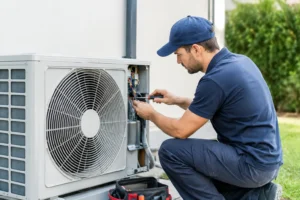
Users can usually keep accessible filters clean in line with the manufacturer’s guidance. Beyond that, planned professional maintenance checks the components that affect safe, efficient operation, including coils, fan performance, refrigerant condition, condensate drainage and electrical connections.
A system that is slow to cool, noisier than usual, leaking water or repeatedly switching itself off should be inspected promptly. Continuing to run a faulty unit can increase electricity use and may turn a manageable repair into a more significant problem.
Choosing efficiency without sacrificing comfort
When comparing new systems, consider their seasonal efficiency figures as well as their purchase price. Higher-efficiency equipment can have a greater upfront cost, but it may reduce ongoing consumption, especially in rooms that are cooled frequently. The best choice depends on how much the system will be used and the demands of the space.
It is also worth considering heating. Many modern air conditioning systems are heat pumps, meaning they can provide efficient heating as well as cooling. For a garden office, bedroom, small retail area or meeting room, this may offer useful year-round value. It is not the right solution for every building, but it should be part of the conversation when planning a new installation.
The most cost-effective air conditioning is not necessarily the unit with the lowest initial price or the one set to the coldest temperature. It is the system that has been properly matched to the room, installed with care, maintained regularly and used sensibly. A professional survey gives you a clearer view of likely performance and running costs before you commit, so comfort remains dependable when you need it most.