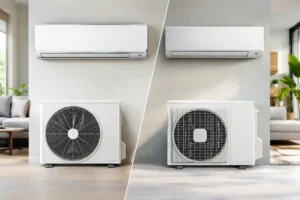
A brand name alone will not determine whether an air conditioning system keeps your bedroom comfortable on a humid July night or gives your office dependable heating through winter. When comparing Daikin versus Mitsubishi aircon, both are premium, well-established choices. The better option depends on the room, the building, how you use it and, crucially, the quality of the design and installation.
For homeowners, landlords and business owners in Essex, the most useful question is not simply, “Which brand is best?” It is, “Which system is right for this property, with the right capacity and controls?” A carefully selected Daikin or Mitsubishi Electric unit can provide efficient cooling and heating for many years. An oversized, poorly positioned or badly installed unit from either brand will not.
Daikin versus Mitsubishi aircon: the practical differences
Daikin and Mitsubishi Electric both have strong reputations in the UK market. Each makes wall-mounted split systems for individual rooms, multi-split systems that connect several indoor units to one outdoor unit, and larger solutions for commercial properties. Both offer inverter-driven systems, meaning they adjust output to maintain the chosen temperature rather than continually switching fully on and off.
That common ground matters. Either manufacturer can be an excellent choice for a lounge, loft conversion, home office, retail unit, restaurant or small office. The differences are usually found in the particular model range, the available features, the intended application and the priorities of the customer.
Daikin is often chosen for its broad range of residential and commercial equipment, refined indoor-unit designs and focus on air treatment options within selected ranges. Mitsubishi Electric is widely recognised for reliable, quiet systems and is a familiar choice across homes and commercial environments. Neither reputation should replace a proper survey, but both brands give customers a strong starting point.
Comfort is about more than cold air
The best aircon system should cool a room evenly, avoid uncomfortable draughts and operate quietly enough for the space. This is especially important in bedrooms, meeting rooms and home offices, where a unit may run for long periods.
Both Daikin and Mitsubishi Electric offer models with variable fan speeds, adjustable louvres and low-noise operating modes. However, one particular indoor unit may suit a room better than another. A compact bedroom with a bed directly opposite the installation wall needs careful consideration of airflow direction. A large open-plan kitchen may need stronger air distribution and a different indoor-unit position altogether.
Do not assume that the highest-capacity unit is the safest option. Excess capacity can cause short cycling, less consistent dehumidification and unnecessary running costs. Correct heat-load calculations consider the room size, ceiling height, glazing, insulation, occupancy, equipment that produces heat and the amount of sun entering the room.
Energy efficiency and heating performance
Air conditioning is no longer only a summer purchase. Modern air-to-air systems can also provide highly efficient heating, making them useful in garden rooms, extensions, converted garages, offices and spaces that are costly to heat with traditional systems.
Daikin and Mitsubishi Electric both supply heat pump air conditioning systems designed to operate efficiently across a range of outdoor temperatures. The actual efficiency you experience will depend on the selected model, the temperature setpoint, the room’s heat loss and how the system is used. Leaving doors or windows open while cooling, for example, can quickly undermine even the most efficient unit.
When reviewing quotations, look beyond a headline efficiency figure. Ask which specific model is proposed, how it will perform for both cooling and heating, and whether the capacity is based on a proper assessment. A lower purchase price can be less attractive if it leaves a room underpowered or requires the system to work harder than necessary.
For commercial premises, controls also deserve attention. Timers, weekly schedules and simple lockout settings can prevent units being left running unnecessarily. In a small office or shop, these practical details can make a real difference to energy use over a year.
Noise, appearance and everyday living
Outdoor-unit noise is a frequent concern, particularly for terraced homes, flats and properties where neighbours are close by. Indoor noise matters just as much in a bedroom or quiet workspace. Both manufacturers offer quiet-running options, but the model, capacity, mounting location and installation method all affect the result.
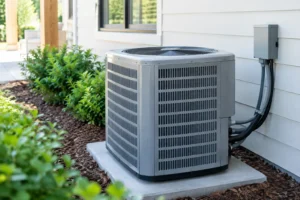
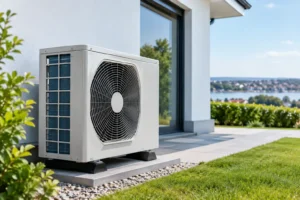
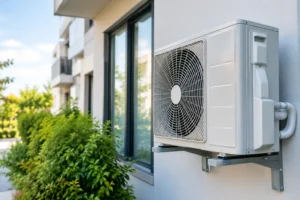
An outdoor unit should be placed where it has clear airflow and can be serviced safely, while also considering bedrooms, boundaries and neighbouring properties. Putting it in the most hidden corner is not always the right answer if that location restricts airflow or creates sound reflection between walls.
Appearance is personal. Some customers prefer a subtle, compact wall-mounted unit that blends into a bedroom or lounge. Others prioritise functionality in a utility area, workshop or commercial back office. Daikin and Mitsubishi Electric both have different fascia styles and sizes across their ranges, so it is sensible to view the proposed unit dimensions before approving an installation.
Reliability, servicing and repairs
Premium equipment is a worthwhile investment, but no air conditioning brand is maintenance-free. Filters collect dust, condensate drains can become blocked and outdoor coils are exposed to weather and debris. Neglect can reduce airflow, affect efficiency and lead to avoidable faults.
The good news is that routine care is straightforward. Indoor filters should be checked and cleaned as advised, particularly in homes with pets or in busy commercial spaces. A professional maintenance visit can assess refrigerant circuit operation, clean key components, inspect electrical connections and confirm that the system is draining correctly.
For landlords and businesses, planned maintenance is often the sensible route because it reduces the chance of an unexpected failure during a heatwave or busy trading period. For homeowners, it helps protect performance and supports the long-term value of the installation.
Warranty terms vary by product and may depend on the system being installed and maintained in line with manufacturer requirements. Always check the warranty offered for the exact equipment in your quotation rather than relying on a general statement about the brand.
Is Daikin or Mitsubishi Electric better for your property?
Choose Daikin when the proposed Daikin range offers the capacity, features and indoor-unit style that best suit your room and budget. It can be a particularly strong fit where air treatment features, discreet design options or a specific multi-room configuration are priorities.
Choose Mitsubishi Electric when its proposed system gives you the right balance of quiet operation, dependable performance, controls and value for the application. It remains a trusted choice for single-room and multi-room installations in homes and businesses alike.
The most honest answer is that there is no universal winner. A well-matched Mitsubishi Electric system is better than an unsuitable Daikin system, and the reverse is equally true. What matters is that the equipment is correctly sized, professionally fitted and supported after installation.
Questions worth asking before you decide
Before accepting a quote, ask the contractor to explain why that exact model and capacity have been specified. You should also understand where the indoor and outdoor units will sit, how pipework and condensate drainage will be routed, what controls are included and what maintenance will be needed.
If you are comparing quotations, make sure they are genuinely like for like. One proposal may include a higher-specification indoor unit, longer pipe runs, electrical work, condensate pumps, trunking or a more complex outdoor-unit bracket. Comparing only the total price can hide important differences in scope and finish.
For an Essex property, a free survey is the right place to start. Essex Air Conditioning can assess the room, discuss whether Daikin or Mitsubishi Electric is the stronger fit, and provide a clear no-obligation recommendation based on comfort, practicality and budget. The right system should feel straightforward once the design has been properly considered.