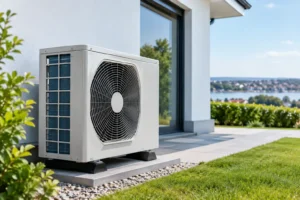
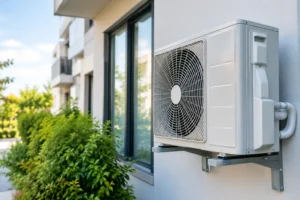
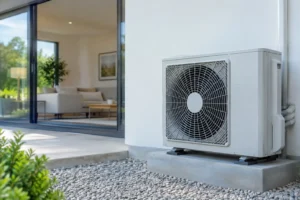
A hot upstairs bedroom, a sun-facing office or a busy shop floor can become uncomfortable long before the peak of summer. The air conditioning trends 2026 that matter most are not about adding unnecessary gadgets. They are about choosing systems that provide dependable cooling, lower running costs and healthier indoor air for the way Essex properties are used.
For homeowners, landlords and business owners, the best decision will still begin with the property itself: its heat gain, layout, occupancy and how people use each room. New technology can make a real difference, but it cannot compensate for an incorrectly sized or poorly installed system.
Air conditioning trends 2026: efficiency becomes the baseline
Energy efficiency is moving from a welcome extra to a central part of every air conditioning decision. Modern inverter-driven units already adjust their output to match the temperature required, rather than repeatedly switching fully on and off. In 2026, more customers will expect this controlled, lower-energy performance as standard.
This matters because an air conditioning system is often used for more than a few exceptionally warm days. A well-chosen split system can also provide efficient heating in cooler months, making it useful in garden rooms, loft conversions, home offices, retail spaces and smaller commercial premises. Whether this is economical depends on the room, insulation levels and the existing heating arrangement, but it is a conversation worth having at the survey stage.
Seasonal efficiency ratings remain useful when comparing equipment, but they should not be the only deciding factor. A highly rated unit installed in the wrong location, with poor pipework routes or unsuitable capacity, may disappoint in real use. Professional system design protects comfort and helps avoid paying for more equipment than the space needs.
Lower-impact refrigerants and future-ready choices
Refrigerant selection is another important direction of travel. The industry continues to move towards options with a lower global warming potential, alongside tighter standards for handling, installation and end-of-life recovery. For customers, this means asking a simple but worthwhile question: is the proposed system a sensible long-term choice for servicing and support?
R32 remains common in many smaller split air conditioning systems because it offers a lower-impact alternative to older refrigerants and is widely supported. The exact best option will vary by system type, building use and manufacturer. Larger commercial projects may have different requirements from a single-room domestic installation.
The practical benefit is not simply environmental. Choosing current, properly supported equipment makes future maintenance more straightforward and reduces the risk of investing in technology that becomes difficult or expensive to service. An experienced contractor will explain the refrigerant and equipment options clearly, rather than treating them as an afterthought.
Smarter control without added complication
Wi-Fi controls, scheduling and app-based temperature adjustment are becoming increasingly common. Used well, smart controls give property owners more visibility over when a system runs and can prevent rooms being cooled or heated when nobody is there.
For example, a homeowner may schedule a bedroom to cool before bedtime rather than leave it running all evening. A small office can set operating hours, apply sensible temperature limits and make sure units are not left on overnight. For landlords and commercial operators, this can provide useful control across multiple rooms or sites.
However, the newest control system is not always the best one. A complicated app that nobody uses will not reduce energy consumption. Controls should be easy for the people in the building to understand, with sensible settings established when the system is commissioned. In commercial environments, simple local controls may suit one business, while central management may be justified for another.
Better zoning for different rooms
Zoning is becoming more relevant as homes and workplaces are used more flexibly. A south-facing lounge, a shaded bedroom and a kitchen do not gain heat at the same rate. Likewise, a meeting room full of people needs different cooling from a quiet reception area.
Multi-split systems and carefully planned individual units allow rooms to be controlled independently. This improves comfort and can avoid wasting energy on unoccupied areas. There is a trade-off: more complex layouts need careful design and may cost more initially. The right answer is usually the system that gives enough control without making maintenance unnecessarily complicated.
Quieter systems for homes and customer-facing spaces
Noise is one of the first concerns raised by customers considering air conditioning, particularly in bedrooms, flats, clinics, salons and offices. Manufacturers are continuing to improve indoor fan design, compressor control and outdoor unit operation. Quiet running is therefore a defining feature of many premium systems in 2026.
Even so, published sound figures are only part of the story. Outdoor unit location, mounting method, neighbouring boundaries and the way sound reflects between walls all affect how a system is perceived. A unit that is technically quiet can still cause an issue if it is positioned directly outside a bedroom window or on a poorly isolated bracket.
This is where a free site survey offers real value. The installer can identify practical locations that protect performance, appearance and neighbourly consideration before work starts. In many Essex homes, particularly where gardens and side access are limited, this planning is more important than choosing between two similar models.
Indoor air quality takes a more prominent role
Cooling remains the main reason many customers enquire about air conditioning, but cleaner indoor air is becoming a much bigger part of the conversation. Good-quality systems include filters that capture airborne dust and particles, while some models offer enhanced filtration or air-purification features.
These functions can improve the comfort of a room, especially where windows are kept closed because of traffic noise, pollen or security concerns. They are not, however, a replacement for proper ventilation. Air conditioning recirculates and conditions air within a space; ventilation is needed to introduce fresh air and manage moisture, odours and carbon dioxide levels.
For offices, hospitality venues and other occupied commercial spaces, the distinction matters. A balanced approach may involve air conditioning for temperature control alongside mechanical ventilation where the building and occupancy demand it. For a home office or bedroom, routine filter cleaning and planned servicing are often the most effective steps to maintain good airflow and clean operation.
Installation quality remains the trend that never changes
The most valuable development in air conditioning is still excellent workmanship. Correct sizing, secure mounting, properly insulated pipework, accurate electrical work, pressure testing and a thorough commissioning process all influence efficiency, reliability and lifespan.
A system should be sized from a real assessment of the room rather than a quick estimate based on floor area alone. Ceiling height, glazing, aspect, insulation, equipment generating heat and the number of occupants can all change the cooling load. Oversizing can lead to short cycling and less consistent comfort, while undersizing leaves the unit working hard without delivering the result expected.
For commercial customers, installation planning should also consider access, trading hours, condensate drainage and how work can be completed with minimal disruption. A reliable contractor will set out what is included, explain any building-specific limitations and provide a clear quotation before installation proceeds.
Maintenance shifts from reactive to planned
As systems become more efficient and connected, there is greater value in spotting small issues early. Reduced airflow, blocked filters, poor drainage or a gradual loss of cooling can increase running costs and eventually lead to a breakdown when the system is needed most.
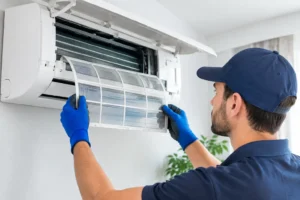
Planned maintenance keeps filters, coils and drains in good condition, while allowing technicians to check electrical connections, operating pressures and overall performance. It also gives businesses a clearer maintenance record and helps landlords meet their responsibilities for equipment they provide.
There is no single maintenance interval suitable for every property. A lightly used domestic unit may need a different schedule from a restaurant, salon or office system operating for long hours. Usage, environment and manufacturer guidance should shape the plan.
Choosing what is right for your property
The strongest 2026 systems will be quieter, more efficient and easier to control, but the best investment is one that fits the building and the people using it. Start by defining the rooms that need attention, when discomfort occurs and whether cooling, heating, air quality or all three are the priority.
Essex Air Conditioning can assess these details during a free survey and recommend a practical solution with no obligation. A clear conversation before installation gives you the confidence to choose equipment that will continue to deliver comfort when the next warm spell arrives.