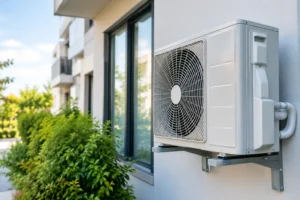
A few years ago, air conditioning was often treated as a luxury for the hottest weeks of summer. That view is changing quickly. Air conditioning trends UK property owners are seeing now reflect a practical need for cooler bedrooms, more productive workplaces and systems that can provide efficient warmth as well as cooling.
For homes, landlords and businesses, the question is no longer simply whether to install air conditioning. It is how to choose a system that suits the building, controls running costs and remains reliable for years to come. The best answer depends on room use, insulation, occupancy and the quality of the installation – not just the price of the unit.
Air conditioning trends in the UK are moving towards year-round use
The biggest shift is the growing use of air-to-air heat pump systems for both cooling and heating. A modern split air conditioning system takes heat from one place and moves it elsewhere. In summer, it removes heat from inside a room. During cooler months, it can reverse that process and provide warm air.
This makes air conditioning particularly attractive for garden offices, loft conversions, extensions, bedrooms and small commercial spaces that are difficult or expensive to heat through an existing system. Rather than buying separate cooling and heating equipment, property owners can have one professionally designed system that supports comfort throughout much of the year.
It is not a replacement for central heating in every property. Larger homes, poorly insulated buildings and spaces with complex heating requirements may need a different approach. However, for a single room or defined area, efficient air-to-air heating can be a valuable addition to a home or business premises.
Lower energy use is driving better system choices
Electricity costs remain a major consideration, so efficiency is rightly at the centre of buying decisions. The good news is that modern inverter-driven systems are very different from older on-off units. Instead of repeatedly running at full output and stopping, an inverter system adjusts its output to maintain the required temperature more steadily.
That usually means lower energy use, less temperature fluctuation and quieter operation. It also makes correct sizing more important. An oversized unit may cool a room quickly but can cycle inefficiently and leave the space feeling clammy. An undersized unit may run continuously during hot weather without ever delivering the desired comfort.
A proper survey should account for more than floor area. Large south-facing windows, roof construction, ceiling height, the number of occupants, computer equipment and kitchen appliances can all add heat to a room. In an office, a meeting room used by ten people needs a different solution from a similarly sized room used by two.
Higher-efficiency equipment needs thoughtful installation
Premium equipment can only perform as intended when it is installed correctly. The indoor unit needs clear airflow, the outdoor unit needs suitable space to reject heat, and pipework must be correctly sized, insulated and tested. Poor positioning can lead to draughts, noise concerns, restricted performance and unnecessary energy use.
This is why the lowest quotation is not always the best value. A system should be selected and fitted for the property rather than treated as an off-the-shelf appliance. A free survey and clear quotation give customers the opportunity to understand the proposed location, capacity and expected benefits before work begins.
Quiet bedroom cooling is now a priority
Better sleep is one of the most common reasons homeowners enquire about air conditioning. Bedrooms can hold heat long after the outdoor temperature drops, particularly in newer well-sealed homes, top-floor flats and rooms beneath a loft roof. Opening a window may bring in traffic noise, pollen or security concerns without cooling the room enough.
Modern wall-mounted units are designed to run quietly at low fan speeds, allowing a room to stay at a comfortable overnight temperature. Features such as sleep settings, adjustable fan speeds and timed operation help avoid excessive cooling while reducing unnecessary running time.
The aim is not to make a bedroom cold. It is to create a stable, comfortable environment that supports sleep. Indoor unit placement matters here: it should distribute air across the room without blowing directly onto the bed. An experienced installer will discuss how the room is used before recommending a position.
Smarter controls are becoming standard
App-based controls are increasingly expected, particularly in busy households and commercial premises. They allow users to set schedules, adjust temperatures and check operating status from a mobile phone or tablet. For a landlord or business operator, this can make it easier to manage systems across several rooms or properties.
The useful part is control, not novelty. A sensible schedule can cool a room before people arrive, reduce output when it is empty and avoid running equipment overnight in an unoccupied office. Used well, this helps balance comfort with running costs.
Smart controls still need sensible settings. Setting a room to an extremely low temperature will not cool it faster, but it can make the system work harder for longer. During warm periods, a moderate target temperature and closed windows and doors will usually give better results than asking the system to fight against outdoor heat.
Ventilation is receiving more attention alongside cooling
Air conditioning and ventilation solve different problems. Air conditioning controls temperature and, during cooling, removes some moisture from the air. Ventilation replaces stale indoor air with fresh air. A room can be cool but still feel stuffy if it is poorly ventilated.
This distinction matters in offices, salons, retail units, gyms and other occupied commercial spaces. As buildings become more airtight to improve energy efficiency, fresh-air provision needs careful consideration. Depending on the building and its use, a dedicated ventilation solution may be required alongside air conditioning.
For homeowners, ventilation can also be important in bathrooms, kitchens and rooms where condensation is a concern. The right solution is based on the cause of the issue. Cooling a room may improve comfort, but it will not correct inadequate extraction or a wider moisture problem on its own.
Better refrigerants and responsible servicing remain essential
Newer air conditioning systems commonly use refrigerants with a lower global warming potential than equipment installed in previous decades. This is a positive development, but it also reinforces the need to use qualified technicians who understand the equipment, refrigerant handling requirements and manufacturer guidance.
Regular maintenance is not an optional extra if a system is expected to stay efficient and dependable. Filters collect dust, indoor coils can become dirty, condensate drains need checking, and electrical and refrigerant components should be inspected. Neglect can reduce airflow, increase energy consumption and eventually lead to avoidable breakdowns.
For commercial customers, planned maintenance also provides useful reassurance before the busiest period of the year. A fault discovered in spring is far easier to deal with than a system failure during a summer heatwave, when comfort, staff wellbeing and customer experience are already under pressure.
Commercial spaces are prioritising comfort and practicality
Businesses are investing in air conditioning for more than temperature control. A comfortable environment helps staff concentrate, gives customers a better experience and can protect stock or equipment that is sensitive to heat. Small offices may benefit from discreet wall-mounted split systems, while larger premises may need multi-split, cassette or more tailored solutions.
The right design should consider daily operations. Retailers may need doors opening regularly to the outside. Server rooms require reliable, consistent cooling. Restaurants and salons create additional internal heat. A system chosen solely by room size can miss these factors.
In Essex, premises in busy town centres, converted buildings and coastal locations can all present different installation considerations. Access for outdoor units, building layout, landlord permissions and operational hours should be discussed early, so work can be planned with minimal disruption.
What to look for before choosing a new system
The strongest current trend is not a particular style of indoor unit or a mobile phone app. It is better decision-making. Customers are asking how a system will work in their room, what it will cost to run, how quiet it will be and who will support it after installation.
Before committing, ask whether the quotation includes a site survey, correct system sizing, installation by experienced technicians, commissioning, clear operating advice and an ongoing maintenance option. If the property is leasehold, rented or subject to building restrictions, check whether consent is needed for an external unit before work is arranged.
A well-chosen system should feel straightforward after installation: cool when the room needs cooling, warm when it needs warmth, and quiet enough that people barely notice it is working. For homeowners and businesses, that is the trend worth following – invest in comfort that is designed properly, maintained well and built around the way the property is actually used.