A busy till area, warm lighting, refrigeration equipment and a sun-facing shopfront can turn a compact retail space uncomfortable surprisingly quickly. The best cooling systems for small shops do more than lower the temperature: they keep customers browsing, help staff stay productive and protect stock that does not cope well with excess heat.
For most independent retailers in Essex, a professionally specified air conditioning system is the most dependable answer. The right solution depends on the shop layout, ceiling height, number of people inside, heat-producing equipment and how much warm air enters whenever the door opens. Choosing on unit price alone can lead to poor coverage, unnecessary running costs and a system that struggles on the hottest days.
What makes a cooling system right for a small shop?
Small shops are rarely simple rectangular rooms with no sources of heat. A barber shop may have dryers and frequent door traffic. A convenience store may have refrigerated cabinets. A boutique may have large front windows receiving afternoon sun. Each detail changes the cooling demand.
A suitable system needs enough capacity to manage peak conditions without being oversized. An undersized unit will run continuously and still leave hot spots. An oversized unit can cool the air too quickly, switch on and off more often, and remove less humidity than it should. A site survey is the sensible starting point because it assesses the actual heat load rather than relying on floor area alone.
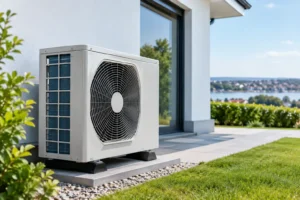
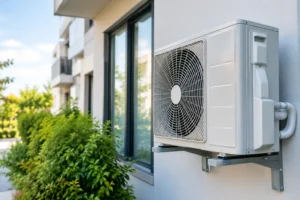
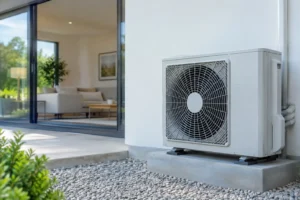
The indoor unit position matters just as much. Cool air should reach the customer area and staff workspace without blowing directly onto a counter, seating area or product display. The outdoor unit also needs a practical location with clear airflow, manageable pipework routes and consideration for neighbouring premises.
Best cooling systems for small shops: the main options
Wall-mounted split air conditioning
For many small shops, a wall-mounted split system offers the best balance of performance, appearance and value. It has an indoor unit mounted high on a wall and an outdoor condenser unit, connected by discreet pipework. Modern inverter systems adjust their output to maintain a steady indoor temperature rather than simply running at full power and stopping repeatedly.
This option works particularly well in single-room shops, salons, offices attached to retail premises and service counters. It provides quick, controllable cooling and usually offers heating too, making it useful throughout the year. A quality split system is generally quiet indoors and does not take up valuable floor space.
The main limitation is air distribution. One unit may be enough for an open shop with a straightforward layout, but shelving, partitions, stockrooms or an L-shaped floor plan can create areas that receive little benefit. In those cases, two smaller indoor units may provide more even comfort than one larger unit.
Multi-split systems
A multi-split system connects several indoor units to one outdoor unit. It is a strong choice for a shop with a separate back office, treatment room, changing area or stockroom where temperatures also need managing.
The benefit is individual control. The main sales floor can be kept comfortable while a less-used room is set differently or switched off. It can also reduce the amount of external equipment required, which is useful where wall space is limited.
Multi-splits involve more detailed design and can cost more initially than a single split system. They are worthwhile when separate zones genuinely need cooling, rather than as a default for every small premises. A well-planned single split remains the more cost-conscious choice for many compact shops.
Ceiling cassette air conditioning
Ceiling cassette units sit within a suspended ceiling and distribute air in several directions. They are often an excellent option for larger small shops, salons and open commercial spaces where a wall-mounted unit would look intrusive or fail to cover the whole floor effectively.
Because air is delivered across the room rather than from one wall, cassettes can give more consistent cooling in an open layout. They are also visually tidy when a suitable ceiling void is available.
Installation is more involved. The ceiling must have adequate space, access for maintenance and a suitable route for drainage and pipework. A cassette may not be practical in a property with a solid ceiling or limited headroom, so this is a decision best made after an on-site assessment.
Ducted air conditioning
Ducted systems hide the main equipment above a ceiling or within a service area, delivering conditioned air through discreet grilles. They can create a very clean finish and are ideal when the shop fit-out demands minimal visible equipment.
For a typical single, small independent shop, ducted air conditioning is often more than is needed. It requires space for ductwork and has a higher installation cost. It becomes a sensible investment for premium retail interiors, premises undergoing a full refurbishment, or shops with several zones where appearance and even air distribution are priorities.
Portable air conditioners and evaporative coolers
Portable units can offer short-term relief, but they are rarely the best long-term cooling system for a customer-facing shop. They take up floor space, need a hose routed through a window or wall opening, can be noisy and are generally less efficient than fixed air conditioning. They may be useful during an emergency breakdown or a brief seasonal requirement, but they should not replace a properly designed installation.
Evaporative coolers are also less suitable for many UK retail environments. They add moisture to the air and their effectiveness falls in humid conditions. They can make a shop feel clammy rather than comfortably cool, particularly when footfall is high.
Do not confuse cooling with ventilation
Air conditioning recirculates and conditions indoor air, while ventilation brings in fresh air and removes stale air. A shop may need both. If customers and staff regularly notice stuffiness, lingering odours or condensation, cooling alone may not resolve the issue.
Extract ventilation can be particularly important in salons, beauty rooms, food preparation areas and businesses using cleaning chemicals or products with strong smells. In other premises, a practical ventilation strategy may involve opening windows, mechanical extract, or a dedicated fresh-air solution. The right approach depends on the use of the space and the existing building layout.
How to choose the right capacity and layout
There is no reliable one-size-fits-all kilowatt figure for small shops. Floor size is only one part of the calculation. A compact south-facing shop with glass frontage and three staff members can need more cooling than a larger shaded unit with lower footfall.
During a professional survey, the installer should consider the size and orientation of the premises, glazing, insulation, ceiling height, internal equipment, occupancy, door use and whether adjacent rooms add heat. This prevents the common problem of installing a unit that looks suitably powerful on paper but cannot keep up at peak trading times.
It is also worth considering where condensate drainage will run and how the external unit will be protected. A poorly positioned condenser can be vulnerable to damage, blocked by stored items or cause avoidable noise concerns. For leasehold premises, check any landlord requirements before installation, especially where external alterations or signage restrictions apply.
Running costs, maintenance and year-round value
The most affordable system is not always the one with the lowest installation quote. Efficient inverter air conditioning usually costs less to operate than older fixed-output equipment, especially when it is correctly sized and maintained. Setting a realistic temperature also helps. Trying to create an excessively cold shop in summer increases energy use and can feel uncomfortable for customers entering from outside.
Many modern systems provide efficient heating in cooler months, which can reduce reliance on electric heaters. This makes air conditioning a year-round comfort investment rather than a seasonal purchase. Controls should be simple enough for staff to use consistently, with sensible temperature limits and timers where appropriate.
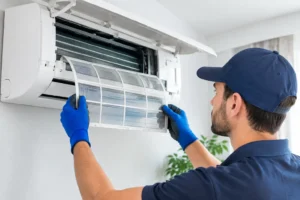
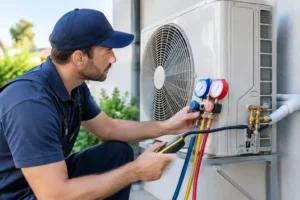
Maintenance protects that investment. Filters need regular cleaning, drains need checking and the system should be professionally serviced to maintain performance and identify faults early. A neglected unit can lose efficiency, develop odours and become more likely to fail during a heatwave, when a quick repair is most difficult to arrange.
For shop owners across Essex, Essex Air Conditioning can survey the premises, explain the practical options and provide a no-obligation quote based on what the space genuinely needs. The aim is not to install the biggest unit, but to provide dependable cooling that suits the shop, the budget and the way the business operates.
A comfortable shop gives people a reason to stay a little longer. Start with an accurate survey, choose a system designed around real trading conditions, and you will have cooling that supports your customers and staff when it matters most.