A warm shop floor can cost more than a few uncomfortable afternoons. Customers browse for less time, colleagues become distracted, refrigerated stock works harder to stay at temperature, and doors or display cases may start to mist. A properly planned retail cooling project in Essex protects the customer experience while giving the business owner better control over energy use and equipment reliability.
Retail premises all have different demands. A compact boutique in Leigh-on-Sea will not need the same approach as a busy convenience store in Basildon, and a salon, pharmacy or food retailer has its own practical priorities. The right answer starts with a professional assessment of the space, the people using it and the systems already in place.
Start a retail cooling project in Essex with the right survey
Choosing an air conditioning unit by its price or headline capacity is a common and expensive mistake. If a system is too small, it will run continuously without properly cooling the space. If it is too large, it can cycle on and off too quickly, waste energy and leave parts of the shop feeling uneven.
A free site survey gives the installer the information needed to specify a system that suits the premises. This should cover the shop layout, ceiling height, glazing, insulation, opening hours, heat-generating equipment and the number of people usually in the building. South-facing shop fronts, large display windows and frequently opened doors deserve particular attention. During a hot spell, these factors can add a significant amount of heat that a basic calculation may miss.
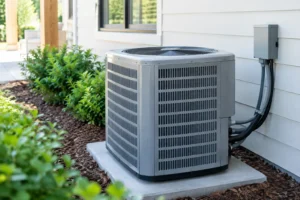
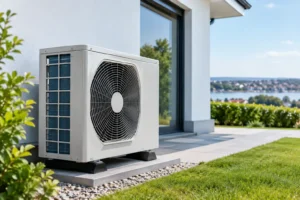
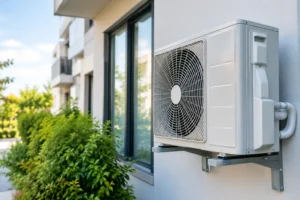
The survey should also consider where indoor and outdoor units can be positioned. An outdoor condenser needs clear airflow and safe access for future servicing. Inside, units need to distribute conditioned air without blowing directly onto till points, changing rooms, seated customers or staff workstations. Good placement makes the system less noticeable while making the shop consistently more comfortable.
For retailers with refrigeration, it is also worth considering the whole cooling picture. Comfort cooling and refrigerated display equipment perform separate jobs, but excessive heat in the store makes both work harder. Reducing the ambient temperature can support more stable conditions around chilled stock and reduce strain on refrigeration equipment.
Design around customers, stock and daily trading
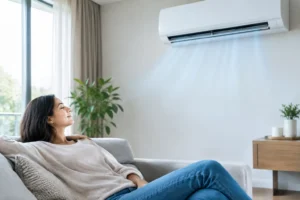
A retail air conditioning system should suit how the shop operates, not force the team to change their routine around it. For most small and medium-sized premises, wall-mounted split systems offer an efficient and discreet solution. They are well suited to individual sales areas, offices and staff rooms. Larger open-plan shops may benefit from cassette units set into a suspended ceiling, while longer or more complex layouts can call for multi-split or VRF systems serving several zones.
Zoning is particularly useful where temperatures vary across the premises. A sunny front window, a busy fitting-room area and a back office rarely need identical settings. Separate controls prevent one uncomfortable area from dictating the temperature for the whole building. That can improve comfort and avoid unnecessary running costs.
Cooling is only part of the decision. Modern air conditioning systems also provide efficient heating, which can be valuable during colder months. For retailers replacing electric heaters or relying on an inconsistent central heating system, a heat pump air conditioning installation can provide a more flexible year-round solution. Whether this is the best option depends on the existing heating arrangement, the condition of the building and how the premises are used outside trading hours.
Ventilation may need attention too. Air conditioning recirculates and conditions indoor air, while ventilation brings in fresh air and removes stale air, moisture and odours. Shops with treatment rooms, enclosed staff areas or high customer footfall may need a ventilation solution alongside cooling. A competent contractor will explain the difference clearly rather than treating the two as interchangeable.
Plan installation with minimal disruption
Retailers cannot usually afford to close for an extended installation. The best projects are planned around deliveries, busy periods and the practical realities of the shop floor. Depending on the scale of work, installation can often be scheduled outside normal opening hours or phased so that key areas remain usable.
Before work starts, agree the route for pipework and electrical supplies, access arrangements and the location of external equipment. Pipework can often be concealed neatly in trunking or routed through ceiling voids, but this must be decided before installation rather than added as an afterthought. Careful planning protects the appearance of the premises and avoids avoidable alterations later.
For leasehold shops, landlords or managing agents may have requirements for external condensers, building penetrations and visible equipment. Checking permissions early prevents a project from being delayed once equipment has been selected. Where planning or property restrictions apply, the proposed system should be designed around them from the outset.
Choose efficiency that works in real trading conditions
The cheapest installation is not always the lowest-cost option over its working life. Premium equipment with a strong efficiency rating, accurate controls and dependable manufacturer support can reduce electricity use and limit costly disruption. This matters when a system is operating through long summer days, weekends and peak retail periods.
Controls make a measurable difference. A sensible set temperature, timed schedules and separate zones can prevent the familiar problem of cooling an empty shop late into the evening. There is no universal ideal setting, but extreme temperature differences between indoors and outdoors should be avoided. A comfortably cool environment is generally more effective than turning the system down as far as possible.
Keep entrances in mind as well. An open doorway can quickly undermine cooling performance, especially on a busy high street. Automatic doors, suitable door closers, air curtains and staff awareness can all help, depending on the premises. Air curtains are not a replacement for correctly sized air conditioning, but they can reduce the amount of warm outside air entering through frequently used doorways.
Noise should be assessed alongside efficiency. Modern systems are quiet when correctly specified and installed, but unit location still matters. Equipment beside a calm consultation area, directly above a checkout or close to neighbouring properties may create issues that are easy to avoid at the design stage.
Commissioning is where performance is proved
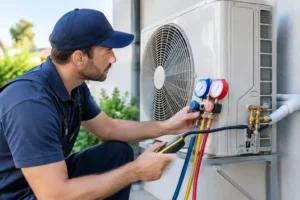
Installation is not complete when the units are mounted on the wall. Proper commissioning confirms that the system is operating safely and as designed. This includes checking refrigerant pipework, drainage, electrical connections, airflow, controls and cooling performance.
The person responsible for the premises should also receive a clear handover. They need to know how to adjust temperature settings, use timers, recognise warning messages and keep filters clear between service visits. Simple guidance prevents staff from overriding controls unnecessarily or assuming there is a fault when a setting has simply been changed.
At Essex Air Conditioning, retail installations are approached as practical business projects, with experienced technicians focused on tidy workmanship, suitable equipment and clear advice from survey through to aftercare. The aim is not merely to fit a unit, but to provide dependable comfort that supports the way the premises trades.
Protect the investment with planned maintenance
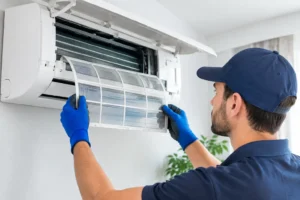
A well-installed system still needs regular attention. Filters collect dust, drains can become blocked, and outdoor units are exposed to leaves, debris and weather. Without servicing, airflow can fall, energy consumption can rise and minor issues can become a failed unit during the hottest week of the year.
For a busy retail site, planned maintenance helps identify worn components and refrigerant concerns before they interrupt trade. The right frequency depends on operating hours, the cleanliness of the environment and the type of system, although many businesses benefit from at least an annual professional service. Shops with long hours, food preparation areas or high dust levels may require more frequent checks.
Staff can support performance between visits by keeping indoor-unit filters clean where appropriate, ensuring outdoor equipment is not obstructed, and reporting unusual noises, leaks or reduced cooling promptly. Waiting until the system stops altogether often turns a straightforward repair into an urgent callout.
A successful retail cooling project is one that customers barely notice. They simply stay comfortable, staff can work without distraction, and the shop remains a pleasant place to spend time when the temperature outside rises. Start with a detailed survey, choose a system that reflects the real demands of the premises, and keep it maintained so it is ready when your business needs it most.