A failed air conditioning system is not always an emergency, but it can become one quickly. When an office is overheating, a bedroom is uncomfortable during a heatwave, or temperature-sensitive equipment is at risk, emergency aircon repair Essex services can help restore safe, usable conditions without unnecessary delay.
The right response depends on the fault. A system that has simply stopped cooling needs a different approach from one that is leaking water through a ceiling, tripping the electrics, or producing a burning smell. Knowing the difference protects your property, your people and your equipment while helping an engineer diagnose the issue more efficiently.
When is an air conditioning fault an emergency?
Air conditioning repairs should be treated as urgent when a fault presents a safety concern, threatens damage to the building, or puts business operations at genuine risk. For commercial premises, that may mean a server room running too hot, a retail environment becoming uncomfortably warm for customers and staff, or ventilation problems affecting occupied spaces.
For homeowners and landlords, an urgent callout may be appropriate where water is escaping from an indoor unit, a system is repeatedly tripping the consumer unit, or vulnerable occupants cannot maintain a safe indoor temperature. A sudden loss of cooling during hot weather can also be particularly difficult in loft conversions, south-facing rooms and properties with limited ventilation.
Not every issue needs an immediate visit. Reduced cooling, unusual noises or a unit that is less efficient than usual should still be checked promptly, but may be suitable for a scheduled repair if there is no safety risk or consequential damage. Acting early is usually less costly than waiting for a manageable fault to stop the system completely.
What to do before emergency aircon repair in Essex
Do not attempt to dismantle the unit, recharge refrigerant or investigate electrical components yourself. Modern air conditioning systems combine electrical controls, pressurised refrigerant lines and condensate drainage. An unqualified repair can make the original problem worse and may create a safety hazard.
Start by checking whether there is an obvious condition that requires the system to be switched off. If you notice smoke, a burning smell, sparking, exposed wiring or water close to electrical fittings, isolate the air conditioning system if it is safe to do so. If there is an immediate fire risk, leave the area and contact the emergency services.
Where there is a water leak, move furniture, stock and electrical items away from the affected area. Place a container or towels beneath a manageable drip, but avoid opening the casing or forcing the drain line. Water escaping from an indoor unit can be caused by a blocked condensate drain, a failed pump, frozen components or an installation issue. The visible water is only part of the problem.
Before contacting an engineer, it helps to have a few details ready:
- the make and model of the indoor or outdoor unit, if visible;
- what the system is doing, including any error code or warning light;
- when the problem started and whether it followed a power cut, storm or recent building work;
- whether the unit is leaking, noisy, frozen, smelling unusual or tripping electrics.
These details can help identify the likely fault and ensure the visit is prepared appropriately. If the system serves a business-critical area, explain this clearly when you request assistance.
Common faults that need rapid attention
A blocked condensate drain is one of the most common reasons for indoor water leaks. As your unit cools the air, it removes moisture. That moisture must drain away correctly. If the pipework is blocked by dirt, algae or debris, water can back up into the unit and overflow. In many cases the repair is straightforward, but leaving it unresolved can damage ceilings, walls, flooring and furnishings.
Electrical faults need particular care. A system that trips the consumer unit may have a problem with the compressor, wiring, fan motor, condensate pump or another component. Resetting it repeatedly is not a solution. It can mask the fault and place further strain on the system. Leave the unit switched off until a qualified technician has inspected it.
Poor cooling can have several causes. Dirty filters restrict airflow, while a frozen indoor coil can prevent the system from delivering cooled air. Refrigerant loss may also be responsible, although refrigerant does not simply get used up. If levels are low, there is normally a leak that must be located and repaired before the system is recharged.
A loud rattle, grinding sound or repeated clicking may indicate a loose component, failing fan motor or compressor issue. The system may continue to operate for a short period, but running it under these conditions can turn a repairable fault into a more expensive replacement. This is especially relevant for older systems where component availability and overall condition must be considered together.
Protecting a business while the system is down
For offices, shops, salons, gyms and hospitality venues, a broken air conditioning system affects more than comfort. High internal temperatures can reduce staff concentration, discourage customers and place added heat load on IT equipment. In server or comms rooms, temporary cooling measures may be necessary while a permanent repair is arranged.
Move heat-sensitive equipment where practical and keep internal doors open only where this improves airflow without compromising security. Close blinds or curtains on sun-facing windows, reduce unnecessary heat sources and use portable fans to circulate air. Fans do not lower the room temperature, but they can improve comfort for occupants in the short term.
If your premises has multiple air conditioning units, avoid assuming all units need to be switched off because one has failed. An engineer can advise on safe isolation of the affected system. Keeping unaffected areas operational may reduce disruption while the fault is investigated.
For landlords, clear communication matters. Let tenants know what has been reported, what immediate steps have been taken and when an engineer is expected. This is particularly valuable where the fault involves a leak or loss of cooling during unusually warm weather.
What a professional repair visit should involve
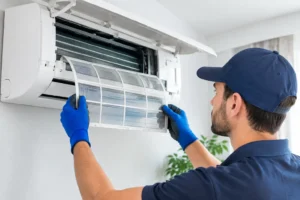
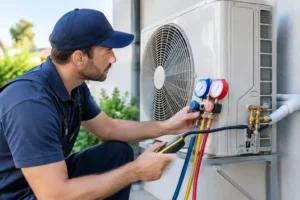
A proper repair is more than restarting the unit and hoping it holds. A qualified engineer should assess the reported symptoms, inspect the relevant indoor and outdoor components, and test the system safely. The work may include checking filters, drainage, electrical connections, fan operation, pressure readings and control settings.
The recommended repair should be explained in plain terms. Sometimes the answer is a replacement part such as a pump, capacitor, sensor or fan motor. In other cases, cleaning, clearing a blockage or correcting an installation issue may resolve the fault. If the system is older or has suffered repeated failures, the engineer should be honest about whether continued repairs represent good value.
There is a trade-off to consider. A lower-cost repair can be sensible where the rest of the system is in sound condition. However, if the unit is inefficient, uses obsolete refrigerant or requires frequent callouts, replacement may offer better long-term reliability and running costs. The right decision depends on the age, condition, usage and importance of the system.
Preventing another urgent callout
Most emergency faults give some warning. Water marks beneath an indoor unit, weaker airflow, musty odours, inconsistent temperatures and unusual operating sounds should not be ignored. Booking a repair while the system is still running often avoids the inconvenience of a complete breakdown.
Routine maintenance is equally valuable for homes and businesses. Filters need cleaning or replacement, condensate drains need checking, and outdoor units need enough clear space to reject heat effectively. Planned servicing also gives an engineer the opportunity to identify worn electrical parts, low performance and drainage issues before they interrupt your day.
Essex Air Conditioning provides practical repair and maintenance support for residential and commercial systems across the county. The focus should always be on a clear diagnosis, safe workmanship and a solution that makes sense for your property rather than a temporary fix that leaves the underlying fault unresolved.
If your system is leaking, tripping electrics, overheating an essential space or showing signs of a serious fault, switch it off where safe and arrange professional assistance. A calm, early response can protect your building and get normal comfort back sooner.