A filter is only useful if air can actually pass through it. Choosing the best air filters indoors is not simply a case of buying the highest-rated option on the shelf. A filter that is too restrictive for your air conditioning or ventilation system can reduce airflow, increase running costs and place unnecessary strain on equipment.
For homes, offices, shops and managed properties, the right choice balances cleaner air with reliable system performance. The best solution depends on what is already fitted, how the building is used and whether the main concern is dust, pollen, odours, fine particles or a combination of all four.
What an indoor air filter should do
A filter in an air conditioning or mechanical ventilation system captures airborne particles before they circulate through occupied rooms and sensitive system components. This can reduce visible dust, protect coils and fans from build-up, and improve the quality of recirculated air.
Most standard filters are effective at collecting larger particles such as lint, hair and coarse dust. Better-grade filters can also capture pollen, mould spores and finer particulate matter. However, no filter can compensate for poor ventilation design, excessive indoor humidity, an unmaintained unit or a source of pollution that remains inside the property.
For example, a kitchen with inadequate extraction will still spread cooking fumes, while a damp room may continue to produce mould spores. Filtering is part of good indoor air quality management, not a substitute for addressing the cause.
Best air filters indoors: match the grade to the system
Filter performance is often described using MERV ratings, although many UK and European products are classified under ISO 16890. You may see terms such as ePM10, ePM2.5 and ePM1, which indicate how well a filter handles particle sizes that can be inhaled deeper into the respiratory system.
The important point is straightforward: finer filtration normally creates more resistance to airflow. That is why the highest available grade is not automatically the right one.
Basic panel filters for equipment protection
Coarse panel filters are commonly used where the priority is protecting air conditioning equipment from larger debris. They are a practical option for lower-demand commercial areas and systems designed around a basic filter specification.
They will not remove a high proportion of fine pollution or allergens, so they may be insufficient for rooms occupied by people with allergies or for busy premises close to main roads. Their main benefit is low airflow resistance and cost-effective routine replacement.
Medium-efficiency filters for everyday homes and offices
For many properties, a medium-efficiency pleated filter provides the most sensible balance. It captures more dust and pollen than a basic panel filter while allowing an appropriately specified system to operate efficiently.
This is often the preferred route for homes with pets, small offices, retail premises and other spaces where comfort, cleanliness and reasonable running costs all matter. It is still essential to confirm that the filter fits the unit and that its pressure drop is suitable for the fan.
Fine-particle filters where air quality demands more
Higher-efficiency filters can be valuable in settings with heavier pollution exposure, higher occupancy or people particularly sensitive to airborne particles. They may be considered in healthcare-related spaces, certain commercial environments and homes affected by traffic pollution or persistent allergy concerns.
Before fitting them, a competent engineer should assess whether the existing air handling or ventilation unit can maintain the required airflow. If it cannot, a more restrictive filter may lead to weak air distribution, noisy operation, higher electricity use and avoidable faults.
HEPA filters for specialist applications
HEPA filters are designed to capture very fine particles and are often associated with standalone air purifiers, clean environments and specialist extraction equipment. They are highly effective when correctly installed, sealed and supported by a fan designed to overcome their resistance.
They are rarely a straightforward upgrade for a domestic split air conditioning unit. Retrofitting a HEPA filter into equipment that was not designed for it can seriously restrict airflow. Where HEPA-level filtration is genuinely needed, a purpose-designed purifier or ventilation solution is usually the more reliable answer.
Do not confuse HVAC filters with air purifiers
An air conditioning filter only cleans the air that passes through that indoor unit. In a multi-room home, a wall-mounted split system in the lounge does not clean bedrooms with the same effectiveness. Equally, a portable air purifier can be useful in one room but does not replace fresh-air ventilation throughout a building.
Carbon filters are another common source of confusion. Activated carbon can help reduce certain odours and gaseous pollutants, but it does not replace a particle filter. It also becomes saturated over time. If cooking smells, solvents or traffic fumes are the concern, carbon may be useful alongside particle filtration, but source control and suitable ventilation remain the first priorities.
How to choose the right filter for your property
Start with the manufacturer’s specification for the equipment. This identifies the dimensions, recommended filter class and, in some cases, the maximum acceptable pressure drop. A filter that is even slightly the wrong size can allow unfiltered air to bypass around the frame, which undermines its purpose.
Next, consider the use of the room. A family home with a dog and seasonal pollen concerns has different needs from a salon, office, café or landlord-managed flat. In commercial premises, occupancy levels and operating hours also matter. A filter that remains acceptable in a lightly used meeting room may load up quickly in a busy reception area.
The local environment can influence the decision too. Properties in Essex near busier roads, construction activity or coastal areas may experience different dust and particulate loads. There is no universal replacement interval because conditions vary so much. Inspection is more dependable than changing filters solely by the calendar.
If you are upgrading filtration, look beyond the filter price. A cheaper filter changed frequently may cost less than a premium filter that causes excessive fan energy use. Conversely, choosing the lowest grade can create more cleaning and maintenance work as dust accumulates on internal components. The right calculation considers system performance, energy use, replacement frequency and the level of air quality required.
Signs your current filter needs attention
A blocked or poorly fitted filter can affect comfort before it causes a complete breakdown. Reduced airflow from vents, rooms that take longer to cool or heat, increased fan noise and visible dust around grilles are all worth investigating.
A musty smell can also point to a maintenance issue, although the filter may not be the only cause. Condensate problems, dirty coils, standing water and microbial growth within the system require professional attention rather than simply fitting a new filter.
For commercial operators and landlords, filter checks should form part of planned maintenance. This protects the equipment, helps maintain comfortable conditions for occupants and makes it easier to identify developing faults before they interrupt normal operations.
Filter replacement and maintenance matter as much as filter grade
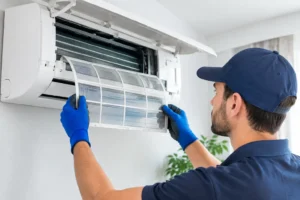
Even the best filter becomes less effective when it is loaded with dust. Washable mesh filters found in many wall-mounted air conditioning units should be cleaned according to the manufacturer’s instructions, allowed to dry fully and refitted correctly. Disposable filters should be replaced rather than cleaned and reused.
Avoid forcing a thicker or denser filter into a unit because it appears to fit. It may damage the filter frame, create air gaps or obstruct the return-air path. Similarly, do not run an air conditioning system for long periods without its specified filter in place. Dust can settle on the indoor coil, reducing efficiency and making a deeper clean more likely.
For ducted ventilation and commercial air conditioning, maintenance should include checking filter condition, seals, airflow and the wider condition of the unit. Essex Air Conditioning can advise on suitable filtration during maintenance visits or a system survey, helping ensure any upgrade supports rather than compromises performance.
When a filter upgrade is not the answer
If a room feels stale, the problem may be a lack of outdoor air rather than poor filtration. Filters remove particles from air moving through a system; they do not reliably reduce carbon dioxide levels created by people occupying a sealed room. Mechanical ventilation, window ventilation where appropriate, or a review of the existing system may be needed.
Likewise, persistent damp, smoke, strong cleaning chemicals or recurring odours should be dealt with at source. Better filtration can help reduce exposure, but it should sit alongside effective extraction, sensible cleaning practices and timely repairs.
Cleaner indoor air begins with the correct filter, properly fitted and regularly maintained. If you are unsure whether your current air conditioning or ventilation system can support a higher-grade filter, a professional assessment is the safest way to protect both the air you breathe and the equipment that keeps your property comfortable.