A system that still blows cold air can look as though it needs no attention. In reality, waiting for a fault is often the most expensive way to manage an air-conditioning unit. The right aircon service frequency protects comfort, keeps energy use under control and helps identify small issues before they cause an avoidable breakdown.
For most homes and businesses, the answer is straightforward: arrange professional maintenance at least once a year. However, systems used heavily, operating in busy commercial settings or providing both heating and cooling may benefit from more frequent visits. The best schedule depends on how hard the equipment works, the environment around it and the consequences of downtime.
How Often Should Air Conditioning Be Serviced?
A domestic air-conditioning system used mainly through warmer months should normally receive a professional service every 12 months. Booking before the summer season gives an engineer the opportunity to clean key components, check performance and spot developing faults before the system is needed most.
For commercial premises, twice-yearly servicing is often the better option. Offices, shops, salons, gyms, restaurants and other occupied spaces may run air conditioning for long hours throughout the year. Many modern systems also provide heating in cooler weather, meaning there is no genuine off-season for the equipment.
Landlords and property managers should also consider the impact of a failure on tenants and business operations. Planned servicing is easier to arrange than an urgent repair visit, particularly during periods of high demand. A documented maintenance schedule also provides useful evidence that equipment has been properly cared for.
A Practical Aircon Service Frequency Guide
There is no single interval that suits every installation. Use these typical schedules as a sensible starting point.
- Home air conditioning used seasonally: professional service once every 12 months.
- Home systems used for heating and cooling: service every 6 to 12 months, depending on use.
- Small offices and retail units: service at least twice a year.
- High-use commercial sites: quarterly maintenance may be appropriate, especially where cleanliness, customer comfort or continuous operation matters.
- Server rooms and critical environments: planned maintenance should be tailored to the system and risk level, often with more regular inspections.
An annual visit is not a substitute for basic day-to-day care. Indoor filters should be checked regularly and cleaned or replaced in line with the manufacturer’s guidance. In a clean, lightly used home, this may be every few months. In a pet-friendly household, busy office or dusty retail setting, filters can need attention much sooner.
Why Regular Servicing Makes a Difference
Air conditioning works by moving heat, moisture and air through several connected components. When filters become clogged or coils collect dust, airflow reduces. The system then has to work harder to achieve the same temperature, which can increase electricity consumption and place extra strain on parts.
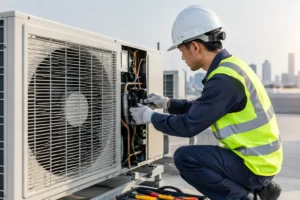
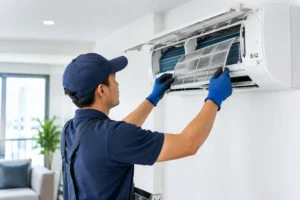
A professional service typically looks beyond the obvious. An experienced engineer will assess cooling and heating performance, inspect electrical connections, clean indoor and outdoor components where required, check drainage and look for signs of refrigerant loss or wear. The exact work depends on the unit and its condition, but the purpose is consistent: keep the system efficient, safe and reliable.
For businesses, maintenance also supports a better environment for staff and customers. Poor airflow, unpleasant smells or inconsistent temperatures quickly affect how a room feels. In workplaces, a comfortable indoor temperature can help people remain productive. In customer-facing premises, it helps create the right impression from the moment someone walks in.
Regular servicing can also extend the working life of the equipment. Air conditioning is a significant investment, and replacing a neglected system early is rarely good value. While maintenance cannot prevent every fault, it reduces the likelihood that minor problems are allowed to develop unnoticed.
Signs Your Aircon Needs Attention Sooner
Do not wait for the next planned service if the system’s behaviour changes. Reduced cooling or heating performance is one of the clearest signs that something needs checking. You may notice rooms taking longer to reach the chosen temperature, uneven airflow between areas or a unit that runs constantly without delivering the expected comfort.
Unusual noises also deserve attention. Rattling, buzzing, grinding or repeated clicking can indicate loose components, electrical issues or mechanical wear. Likewise, persistent odours should not be ignored. A musty smell may point to moisture or dirt around the indoor unit and drainage system, while a burning smell requires prompt professional assessment.
Water leaks from an indoor unit are another common warning sign. This can happen when a condensate drain becomes blocked, though the underlying cause should be checked rather than simply wiping up the water. A sudden increase in running costs, repeated error codes, frozen pipework or a system that trips the electrics all justify booking a repair visit without delay.
What Changes the Right Service Interval?
Usage is the first consideration. A bedroom unit used only on a few hot nights each year does not face the same workload as a multi-split system cooling an office five days a week. Systems that run through winter for heating also accumulate more operating hours and should be treated accordingly.
The surrounding environment matters too. Properties near busy roads, construction work or coastal areas may experience more dust, debris or exposure around outdoor units. In Essex, units installed close to the coast can benefit from careful inspection, as salt-laden air may contribute to corrosion over time. This does not automatically mean every coastal unit requires constant servicing, but it is a sensible factor when setting a maintenance plan.
Indoor conditions can affect performance as well. Commercial kitchens, salons, workshops and properties with pets may create more airborne particles than a typical living room. Filters and coils can become dirty faster, reducing airflow and placing unnecessary pressure on the system.
Finally, check the manufacturer’s recommendations and any warranty conditions. Some warranties require evidence of regular professional maintenance. Following the stated service requirements helps protect both the equipment and your ability to make a claim should a fault occur.
What Homeowners Can Do Between Services
There are a few simple checks that help keep an air conditioning system in good order between engineer visits. Keep the area around the outdoor unit clear of leaves, boxes, garden waste and other obstructions. It needs adequate airflow to release heat effectively.
Indoors, inspect accessible filters and clean them only as directed for your unit. Avoid spraying cleaning products into the system or attempting to remove covers and electrical parts. These jobs can cause damage, affect performance or create a safety risk if carried out incorrectly.
It is also worth running the system briefly before peak season rather than discovering an issue on the first exceptionally warm day. Listen for unusual sounds, check that air is flowing properly and make sure the unit responds to the controller. Early testing leaves more time to arrange a convenient appointment if something is not right.
Planned Maintenance Is Better Than Emergency Repairs
Reactive repairs have their place, particularly when a unit fails unexpectedly. However, a planned maintenance arrangement gives homeowners and businesses greater control. Visits can be booked around trading hours, tenant access or quieter periods, and potential faults can be addressed before they disrupt the property.
The cost balance is usually clear. More frequent servicing has an upfront cost, but an interval that is too long can lead to poorer efficiency, uncomfortable rooms and more expensive repair work. For a lightly used domestic unit, annual maintenance is normally proportionate. For a busy commercial system, twice-yearly or quarterly servicing can be a sensible investment in continuity.
Essex Air Conditioning can assess how your system is used and recommend a maintenance schedule that fits the equipment, property and budget. The right frequency is not about paying for unnecessary visits. It is about keeping your air conditioning dependable when you need it most.