A failed air conditioning system rarely chooses a quiet day. It tends to happen during a heatwave, in the middle of a busy service, or when staff and customers need a comfortable space most. The best commercial aircon maintenance tips focus on preventing that disruption while controlling energy costs and protecting the equipment you have invested in.
For offices, shops, restaurants, clinics and managed commercial premises, maintenance is not simply a technical requirement. It affects comfort, productivity, stock protection and the impression your business makes on visitors. A planned approach gives you more control than an emergency callout ever can.
Best commercial aircon maintenance tips for reliable performance
1. Set a maintenance schedule that reflects how the building is used
Most commercial systems benefit from professional servicing at least twice a year: once before the warmer months and again before winter heating demand begins. However, there is no one-size-fits-all interval. A lightly used office system may need less attention than equipment in a busy salon, commercial kitchen, gym or retail unit where doors open constantly and airborne dust is higher.
Your maintenance schedule should account for operating hours, occupancy, the age of the system and the environment around the indoor and outdoor units. Systems that run long hours or support server rooms and critical workspaces deserve closer monitoring. A contractor can help set a sensible programme based on the actual demands placed on your equipment, rather than servicing it only when a problem becomes obvious.
2. Keep filters and indoor units clean
Blocked filters are one of the most common causes of weak airflow, poor cooling and rising running costs. As filters load with dust, the fan has to work harder to move air through the unit. The system may still appear to be operating, but it will use more electricity and struggle to achieve the set temperature.
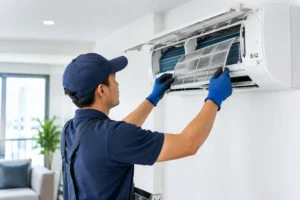
Facilities teams can visually check filters between service visits where units are safely accessible, but cleaning or replacement should follow the manufacturer’s guidance. Some filters can be cleaned, while others must be replaced. Using the wrong method can damage the filter or send accumulated dust back into the room.
Professional maintenance should also include cleaning indoor coils, fan components, grilles and condensate trays. This supports better air circulation and helps prevent unpleasant odours caused by moisture and organic build-up within the unit.
3. Do not ignore changes in airflow, noise or smell
Commercial air conditioning generally gives warning signs before it stops altogether. A room that takes longer to cool, a unit that rattles or a drain smell near an indoor cassette may point to an issue that is cheaper to resolve early.
Ask staff to report changes promptly, particularly in areas they use every day. Useful details include the location of the unit, the time the issue occurs, whether it is cooling or heating poorly, and any unusual noise or water leak. This gives your maintenance engineer a clearer starting point and may reduce diagnostic time.
A faint smell when a system first starts after a period of inactivity can be normal. Persistent musty, burning or chemical smells are not. Switch the unit off if there is a burning smell, visible damage or a repeated electrical fault, then arrange a professional inspection.
4. Protect the outdoor condenser from obstruction
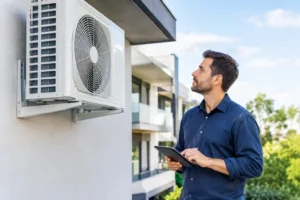
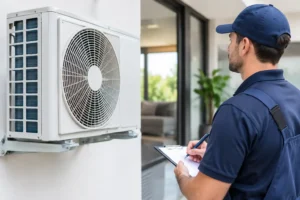
The outdoor unit needs a clear path for air to enter and leave. Leaves, litter, vegetation and stored items can restrict airflow around the condenser, forcing the system to work harder and potentially leading to overheating or poor cooling.
Include the outdoor area in routine site checks. Remove loose debris around the unit and make sure no one uses the space for storage. Do not cover an operating unit or place planters, bins and equipment directly against it. If the condenser is on a roof, access and safety arrangements should be managed properly rather than leaving checks to untrained staff.
It is also worth looking for signs of physical damage, corrosion, loose panels or tampering. Commercial sites with publicly accessible external areas may benefit from suitable protective measures, provided these do not restrict ventilation or engineer access.
5. Check condensate drainage before it becomes a leak
Air conditioning removes moisture from the air, and that water must drain away correctly. Blocked condensate pipes, dirty drain pans and failed pumps can cause internal leaks, ceiling staining and damage to finishes or electrical components.
During a service, an engineer should inspect and clear the drainage route, test condensate pumps where fitted, and check that pipework is secure. This is particularly valuable before periods of regular cooling use, when the system will produce more condensate.
If you see water beneath an indoor unit, do not assume it is harmless condensation. Turn the system off if water is close to electrical fittings or spreading across the floor, protect the area, and arrange a repair. Acting early can prevent a small drainage issue turning into a costly property claim.
6. Keep controls, settings and working hours under review
A well-maintained system can still waste energy if it is controlled poorly. Thermostats set too low in summer or too high in winter create unnecessary demand and can leave occupants uncomfortable due to sudden temperature changes between rooms.
Choose realistic setpoints and avoid constant adjustments throughout the day. For many workplaces, a stable, moderate temperature is more comfortable and economical than chasing a very cold or very warm setting. Programme operating times around occupancy too. There is little value in cooling an empty office for hours before staff arrive or after they leave.
If different areas of the building have very different needs, such as a south-facing meeting room and a shaded reception, speak to an engineer about zoning or control adjustments. The answer is not always a larger system. Sometimes better control of the existing equipment is the more cost-effective solution.
7. Monitor energy use and system run time
Rising electricity bills do not automatically mean the air conditioning is at fault, but unexplained increases deserve attention. Compare energy use with previous periods while considering occupancy, weather and operating hours. If the system now runs for longer to deliver the same comfort level, it may have dirty coils, airflow restrictions, control faults or refrigerant-related issues.
Modern systems may provide run-time data and error codes through their controllers. Keep a simple record of repeated faults, repairs and service findings. Over time, this helps identify whether a unit is reliable enough to keep maintaining or whether replacement planning is becoming the better financial decision.
Older equipment can often be maintained effectively, but there is a trade-off. Repeated callouts, declining efficiency and hard-to-source parts can make ongoing repair less sensible than investing in a modern replacement. A dependable contractor should explain both options clearly rather than pushing a replacement before it is justified.
8. Arrange professional refrigerant and electrical checks
Refrigerant work is not a DIY task. A qualified engineer should inspect refrigerant circuit performance, look for signs of leaks, and carry out any required checks in line with applicable F-gas responsibilities. The frequency of formal leak checks can depend on the system’s refrigerant charge and its CO2 equivalent, so it is worth confirming your obligations for each site.
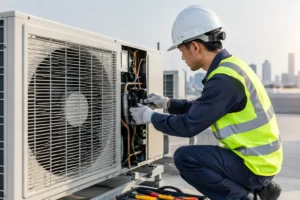
Electrical connections, isolators, capacitors and control components also need professional attention. Heat, vibration and normal use can affect connections over time. An engineer can identify wear before it causes a breakdown, nuisance tripping or damage to a more expensive component such as a compressor.
Keep service records available for the person responsible for the premises. Clear documentation is useful for compliance, warranty support, budgeting and future fault diagnosis.
9. Plan maintenance around your busiest periods
The best time to service commercial air conditioning is not when every unit is needed at full capacity. Book planned visits ahead of peak summer demand where possible, and arrange work at times that minimise disruption to customers and staff.
For businesses in Essex, this can be especially useful before warm spells place sudden pressure on systems across offices, retail premises and hospitality venues. Planned maintenance appointments are easier to schedule than urgent repairs during the busiest part of the season.
Where your premises cannot tolerate downtime, ask about a maintenance plan that prioritises response and includes clear recommendations for critical equipment. Server rooms, treatment areas and spaces storing temperature-sensitive stock may need contingency arrangements as well as regular servicing.
10. Use maintenance visits to plan, not just react
A good service visit should leave you with more than a ticked checklist. It should provide a clear picture of system condition, work completed, developing faults and practical next steps. That may include cleaning recommendations, repairs to budget for, controls that need adjusting, or advice on when an ageing system should be reviewed.
Essex Air Conditioning provides planned commercial maintenance with experienced technicians who can assess performance, address faults early and help keep your workplace comfortable throughout the year. The aim is straightforward: fewer unexpected failures, more efficient operation and equipment that lasts as long as it reasonably should.
A commercial air conditioning system is easiest to manage when maintenance becomes part of normal building care. Put a clear schedule in place, give staff a simple way to report concerns, and act on small changes before they interrupt the working day.