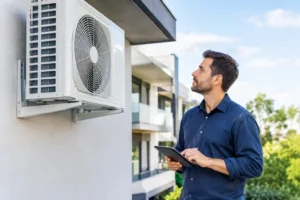
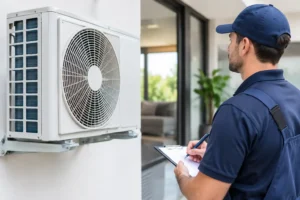
A bedroom that stays stuffy long after the rest of the house has cooled, a south-facing office that becomes uncomfortable by lunchtime, or a shop floor with warm, still air can make summer difficult to manage. To improve airflow in hot rooms, the aim is not simply to add a fan. You need to move warm air out, bring cooler air in where possible, and deal with the heat sources that are working against you.
The right solution depends on the room, the building and how it is used. A simple change to ventilation may be enough for a small bedroom, while a busy office, loft conversion or commercial space may need a properly specified air conditioning system.
Start by identifying why the room gets hot
Before buying more equipment, look at what is causing the heat to build up. South- and west-facing rooms receive strong afternoon sun, particularly where large windows have limited shading. Top-floor rooms and loft conversions often gain heat through the roof, while kitchens, server cupboards, gyms and rooms with several people or computers create heat internally.
Poor air movement makes each of these issues feel worse. If the room has one small window, internal doors are kept shut, or air has no clear route to leave the space, heat lingers. This is common in modern, well-sealed properties as well as older buildings with awkward room layouts.
A useful test is to compare the hot room with an adjacent room at the same time of day. If the difference is significant, note when it starts, which windows receive sun and whether the air feels still or humid. Those details help separate a ventilation issue from a wider cooling requirement.
7 ways to improve airflow in hot rooms
1. Create a clear path for air to travel
Opening a single window can provide fresh air, but it does not always create meaningful circulation. Where it is safe and practical, open windows or vents on opposite sides of the property to encourage cross-ventilation. In a flat or a room with windows on only one wall, opening the door to a cooler hallway or another ventilated room can give air a route through the space.
Keep internal pathways clear. A large wardrobe, shelving unit or heavy curtain positioned directly in front of a vent or window can restrict the limited airflow the room has. This is a small adjustment, but it can make a noticeable difference in compact bedrooms and home offices.
2. Use fans to direct heat out, not just around
A fan cools people mainly by moving air across the skin. It does not lower the room temperature on its own. Position matters.
In the early morning or late evening, when outside air is cooler, place a fan near an open window facing into the room. During the hottest part of the day, if the outside air is hotter than indoors, close the window and use blinds or curtains to limit heat gain. Later, a fan facing out of a window can help push trapped warm air outside, especially when another opening elsewhere supplies replacement air.
Ceiling fans should rotate anti-clockwise in summer to direct air downwards. If they wobble, make excessive noise or fail to produce a useful breeze, they may need balancing, cleaning or replacement.
3. Reduce solar gain before it enters the room
Stopping sunlight at the glass is more effective than trying to remove the heat once it has entered. Close fitted blinds, curtains or shutters before direct sun reaches the window, rather than after the room has already warmed up. Light-coloured, reflective blinds are generally more effective than dark, heavy fabrics for reducing solar gain.
External shading can be particularly valuable for conservatories, glass-fronted offices and rooms with wide south-facing windows. The best option depends on planning considerations, window style and the building’s appearance, but awnings, external blinds and suitable solar-control glazing can all reduce the load on any cooling system.
Do not block required escape windows or permanent ventilation openings. Safety and adequate background ventilation must come first.
4. Check extract ventilation in kitchens and bathrooms
Warm, humid air from cooking, showering and drying clothes can spread into nearby rooms. A weak extractor fan may leave moisture and heat indoors long after the activity has finished. Check that kitchen and bathroom extractors run effectively, that grilles are clean and that external vents are not blocked.
If an extractor is noisy, slow to clear steam or stops shortly after it starts, it may be undersized, poorly ducted or due for repair. Improving extraction does not replace air conditioning in a genuinely hot room, but it prevents unnecessary heat and humidity from adding to the problem.
5. Remove avoidable heat sources
Small electrical loads add up in enclosed rooms. Computers, monitors, printers, televisions, chargers and lighting all release heat. Switch equipment off fully when it is not needed, and avoid leaving high-powered devices running in a small office or bedroom overnight.
LED lighting produces less waste heat than older halogen fittings. In a commercial setting, review whether equipment is being placed in a poorly ventilated cupboard or against a wall where warm air cannot disperse. Sometimes rearranging a workstation or relocating a printer is a sensible first step.
6. Keep existing vents and air conditioning clear
If the room already has wall vents, trickle vents, grilles or an air conditioning unit, do not cover them with furniture, decorations or drying laundry. Air conditioning indoor units need a clear throw of air across the room, while return grilles need unobstructed access to pull room air back into the system.
Dirty filters are another frequent cause of poor performance. A blocked filter reduces airflow, can make a unit work harder and may affect indoor air quality. Filters should be cleaned or replaced in line with the manufacturer’s guidance. If an air conditioner is running but the room remains hot, professional servicing can identify issues such as low refrigerant, a dirty coil, fan faults or incorrect system sizing.
7. Consider fixed air conditioning for persistent heat
Portable fans and better window management have limits. If a room is regularly unusable in warm weather, fixed air conditioning gives controlled cooling rather than short-term relief. Modern split systems can cool a specific bedroom, home office, retail area or workplace efficiently, and many provide heating during colder months too.
Correct sizing is essential. An oversized unit can cool too quickly without managing humidity effectively, while an undersized system may run continuously and still struggle. Room dimensions, insulation, glazing, orientation, occupancy and heat-producing equipment should all be considered before selecting a system.
When poor airflow needs professional attention
Arrange an assessment if the room has persistent condensation, mould growth, stale odours, excessive humidity or a marked temperature difference from the rest of the property. These signs can point to inadequate ventilation, extraction problems or building-related issues that should not be ignored.
For landlords and commercial property operators, ventilation is also a comfort, maintenance and occupant wellbeing concern. A hot meeting room, salon, classroom or office can affect concentration and customer experience. Waiting until the hottest week of the year often limits the available options, especially if new equipment or electrical work is required.
A professional survey should look beyond the unit itself. The most effective recommendation considers the room’s heat load, where air can be distributed, drainage requirements, electrical supply, outdoor unit position and the practical needs of the people using the space.
A practical plan for homes and businesses in Essex
Begin with the no-cost checks: use windows strategically, clear vents, reduce heat from equipment and make sure extract fans are working properly. If the room still becomes uncomfortable, record the times and conditions when it is worst. This creates a clear picture of whether improved ventilation, targeted cooling or both are required.
For homeowners and businesses across Essex, Essex Air Conditioning can assess the space and provide a straightforward recommendation based on the building and your budget. A free survey and no-obligation quote make it easier to choose a solution that delivers reliable comfort rather than a temporary fix.
A hot room should not dictate when you can sleep, work or welcome customers. Address the airflow early, and you will have more choice, better comfort and a solution that suits the space properly.